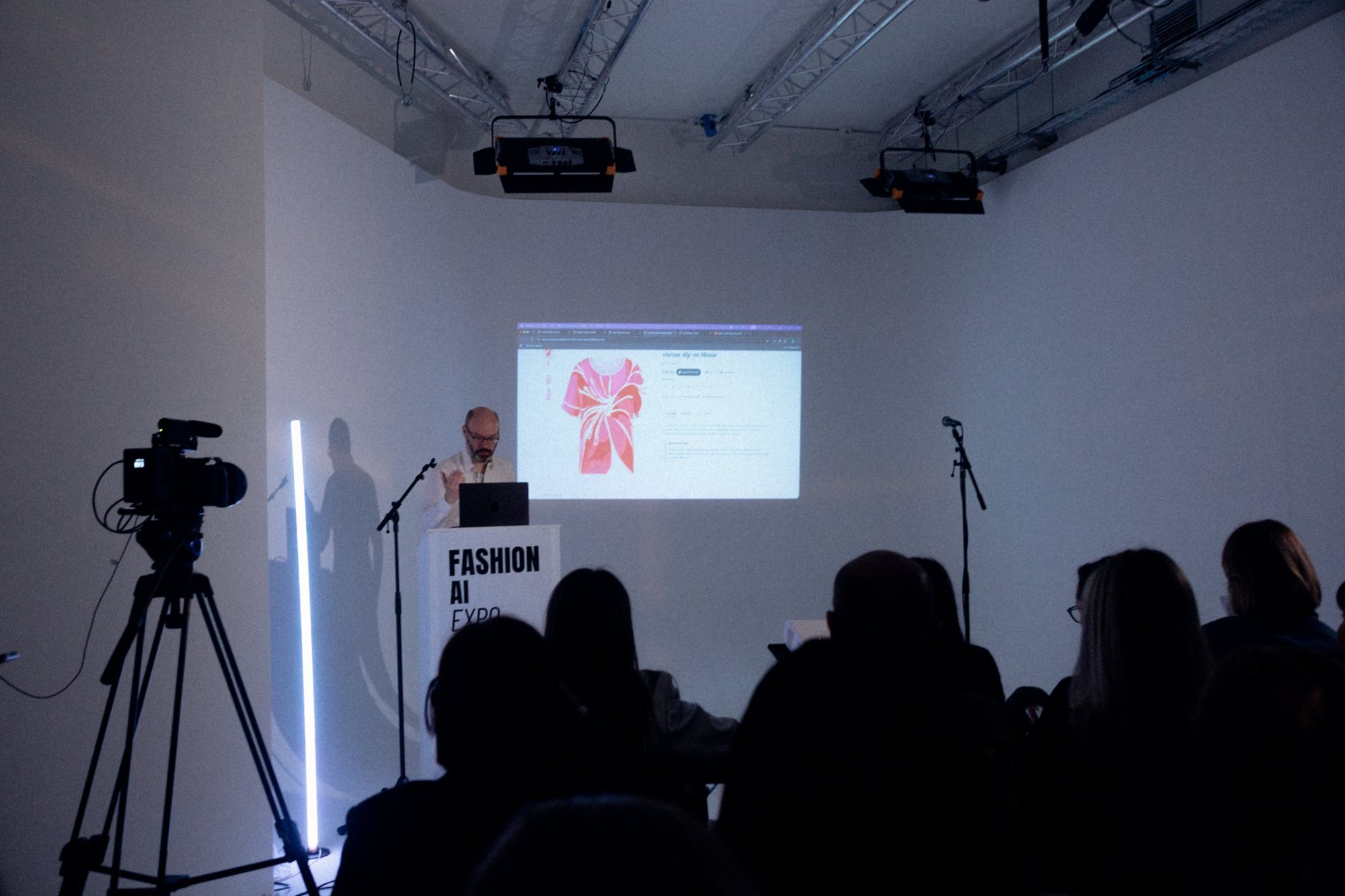
Benjamin Dageroth, co-founder of Hypsh, presenting at Fashion AI Expo Paris, October 2026
Back to Magazine
Field Notes · Issue No. 09

Dressing for the Agentic Future
Why Product Data Is Fashion's New Storefront

At Fashion AI Expo Paris, Benjamin Dageroth, co-founder of Hypsh, argued that the next battle in fashion e-commerce will not be fought over images or prices, but over how well a brand's products can be understood, by people and by the AI agents that will soon shop for them.

Benjamin Dageroth came to Hypsh by way of a disagreement. At a Berlin fashion startup, he watched product recommendations run on statistics: what sells most, what is cheapest this week. He proposed a generative-AI approach instead. The answer was no. So he quit, and since the beginning of 2026 he has been building Hypsh with his co-founder, Stephan Pfob.

On stage in Paris, he placed his work in the day's wider story. Luca Tonello of Deda Stealth had shown AI transforming fashion's back office. Genera.Space had shown it transforming content production. Hypsh, Dageroth said, is about the moment in between: how people discover what to wear.

Outfits, Not Items

Shops are built around single products. People are not. "You don't really want the white blouse," Dageroth told the room. "You want the outfit you need the white blouse for."

Yet online stores rarely know what that outfit is. They know what is popular and what is on sale. Type a query into a large marketplace and you face an endless scroll of separate pieces, with the work of putting them together left entirely to you.

Many shoppers have already found a workaround. Dageroth asked how many in the audience had ever asked ChatGPT or Claude how to style an outfit. A few hands went up. "You don't have to admit it here." The demand for advice is real; it simply hasn't been met by the stores themselves.

You don't really want the white blouse. You want the outfit you need the white blouse for.

Benjamin Dageroth, Hypsh

A Stylist You Can Talk To

Hypsh starts from intent rather than inventory. The shopper sets a budget and describes the moment: a job interview, a casual dinner, the office, or, as Dageroth demonstrated, "going to the Paris Fashion AI Expo and really wanting to stand out."

For those who struggle to put a feeling into words, Hypsh offers a library of trends lifted from TikTok and Instagram: dopamine dressing, old money, business casual, poet core. The AI stylist then searches the catalogue (around 100,000 items on hypsh.com, according to Dageroth) and assembles a complete look.

The conversation doesn't stop there. "Give me more budget." "I don't like the pink." The shopper keeps talking to the stylist until the look feels right, then sees it on a model, or on themselves from a single photo, in 20 to 30 seconds.

Behind each suggestion sits a style passport: body shape, proportions, colouring, age and sizes. It keeps the advice personal, and practical. Hypsh only proposes pieces that are in stock in the shopper's size, "so we don't suggest a miniskirt if you're above 60," Dageroth added with a smile.
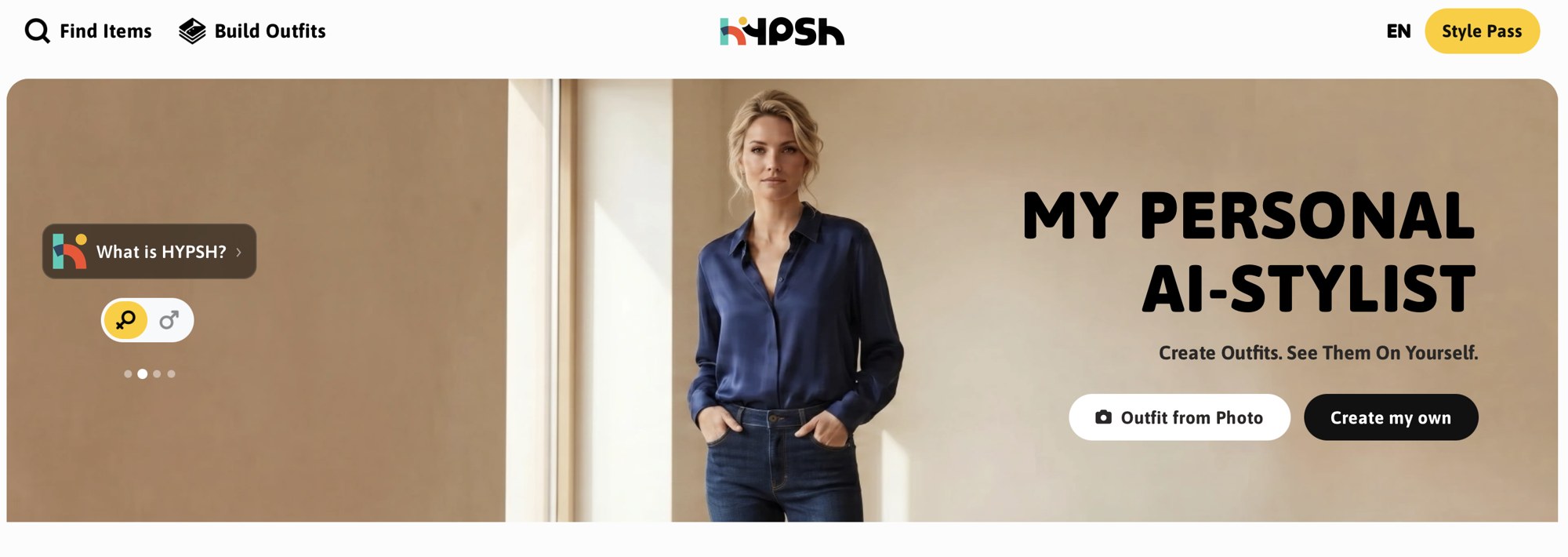
Screenshot of the Hypsh homepage: My Personal AI-Stylist — Create outfits. See them on yourself.
"My personal AI-stylist." Screenshot from the Hypsh homepage · Image courtesy of Hypsh

The Invisible Work

The most important part of Hypsh is the part shoppers never see. A typical product feed holds a short description and a few columns, such as material or price. For an AI trying to reason about style, that is almost nothing.

So Hypsh reads every product image alongside the feed and adds 40 to 50 attributes per item: composition, construction, fabric weight, fit, silhouette, sleeves, volume. Above all, it adds styling information, from colours and patterns to what a piece naturally pairs with. Every retailer that shares its feed receives this richer version back.

Dageroth's reason for doing this goes beyond his own platform. Soon, he believes, shoppers will send personal AI agents out to find an outfit for them. "The more information you provide to the agent, the more chance it has to understand the garment and put it into an outfit." In that world, product data becomes the shop window.

It also raises a harder question, echoing a point Genera.Space made earlier in the day. If AI agents mix and match everything freely, where does that leave the brand? Today's product feeds contain no guidance for agents at all. Hypsh adds instructions for agents on how a brand's pieces should be styled and combined. "That's how brands keep their identity."

The more information you provide to the agent, the more chance it has to understand the garment and put it into an outfit.

Benjamin Dageroth, Hypsh

From Screen to Store, and Back

Dageroth's vision reaches beyond the website. In a physical store, a shopper scans a QR code and builds complete outfits from what that store has in their size, or scans a single garment to see how to style it with pieces a few rails away. Better still, they choose a look at home, tell the store they'll arrive at 3 p.m., and find everything waiting in the fitting room.

The circle continues at home. Shoppers can upload what they already own and ask for pieces that complete it. Over time, Hypsh becomes a map of their wardrobe: what they wear, what they don't, and what they could resell.

That resale, he suggested, could stay within a brand's own community, since people who buy from the same label tend to share the same taste. It is the same thread Luca Tonello pulled that morning, with Trove: a garment's life doesn't end at the first sale.

Hypsh is also bringing partner brands into ChatGPT, so that shoppers who already ask an AI for style advice can find, and buy, real pieces there.

What Brands Should Take Away

For retailers, Dageroth claims the benefits are commercial: bigger baskets, fewer returns and higher conversion, because shoppers see how pieces work together before they buy. The looks Hypsh generates are designed to be flattering enough to share on social media.

The entry point is deliberately simple. A product feed is enough to start, through APIs and widgets, and retailers can test the service free for three months. Independent designers can join hypsh.com through an affiliate model, while retailers who bring Hypsh into their own website or store pay a subscription. In answer to a question from Diana Nelson, Dageroth was candid about where it works best: "The larger the catalogue, the better the output."

The broader lesson reaches every brand in the room, large or small. As AI agents begin to browse, compare and buy on our behalf, a product will only be as visible as its data is rich. The brands that describe their pieces well, and tell the machines how they want to be worn, will keep their voice in a world of infinite combinations.

Benjamin Dageroth spoke at Fashion AI Expo Paris on 2 October 2026, during Paris Fashion Week, at Artistic Palace. Hypsh was a partner of the event.

See you in the next article.

FAIE Editorial Team
Fashion AI Expo
Previous article
The Seven Rules of AI Fashion Imagery →
→