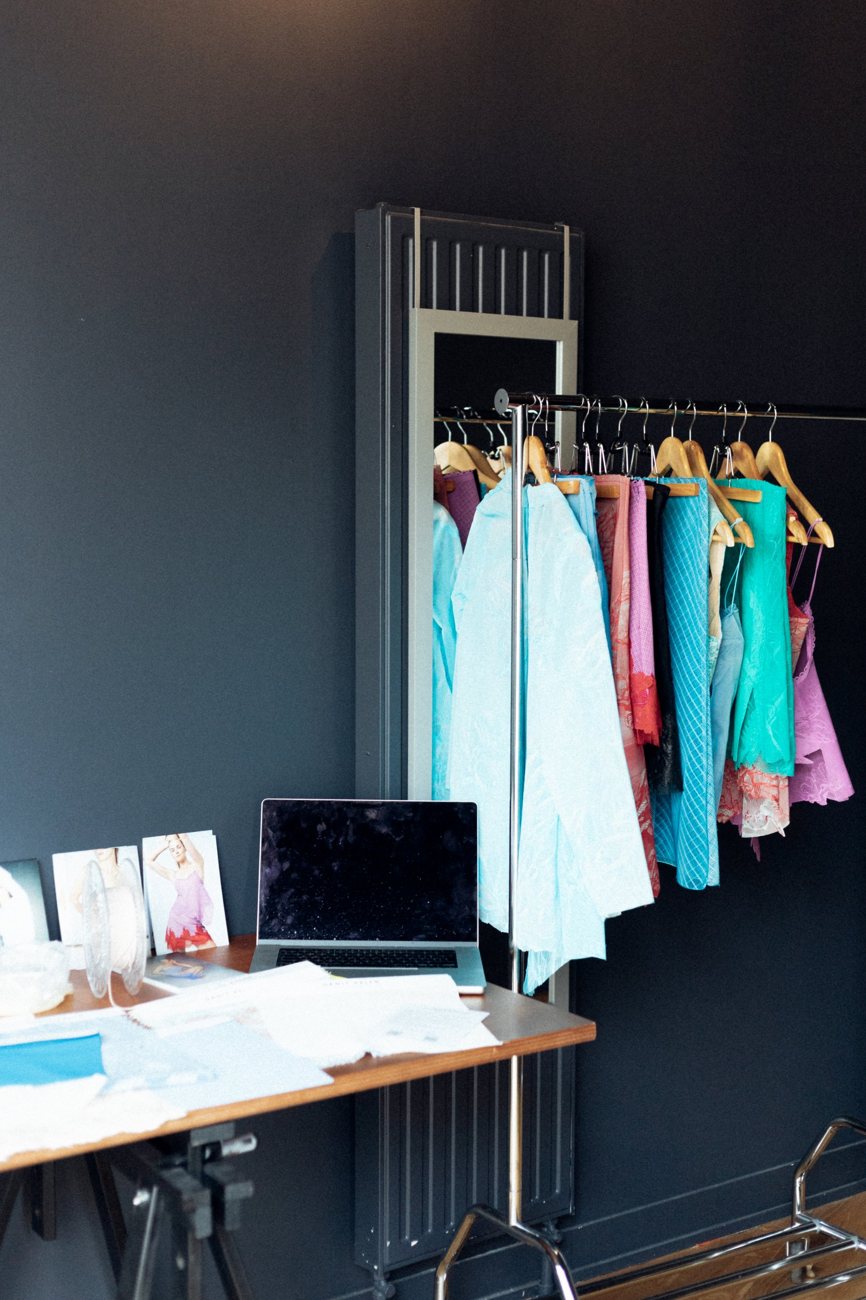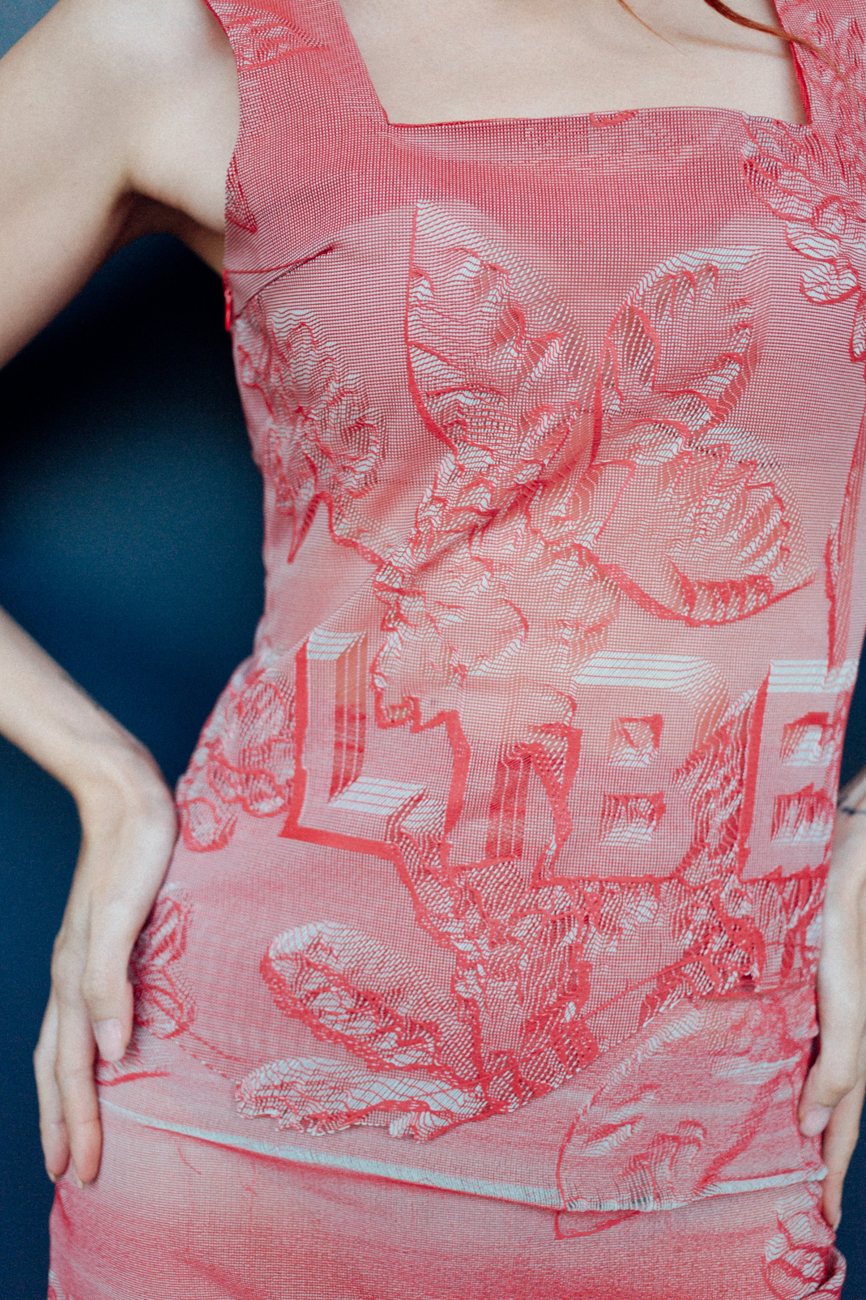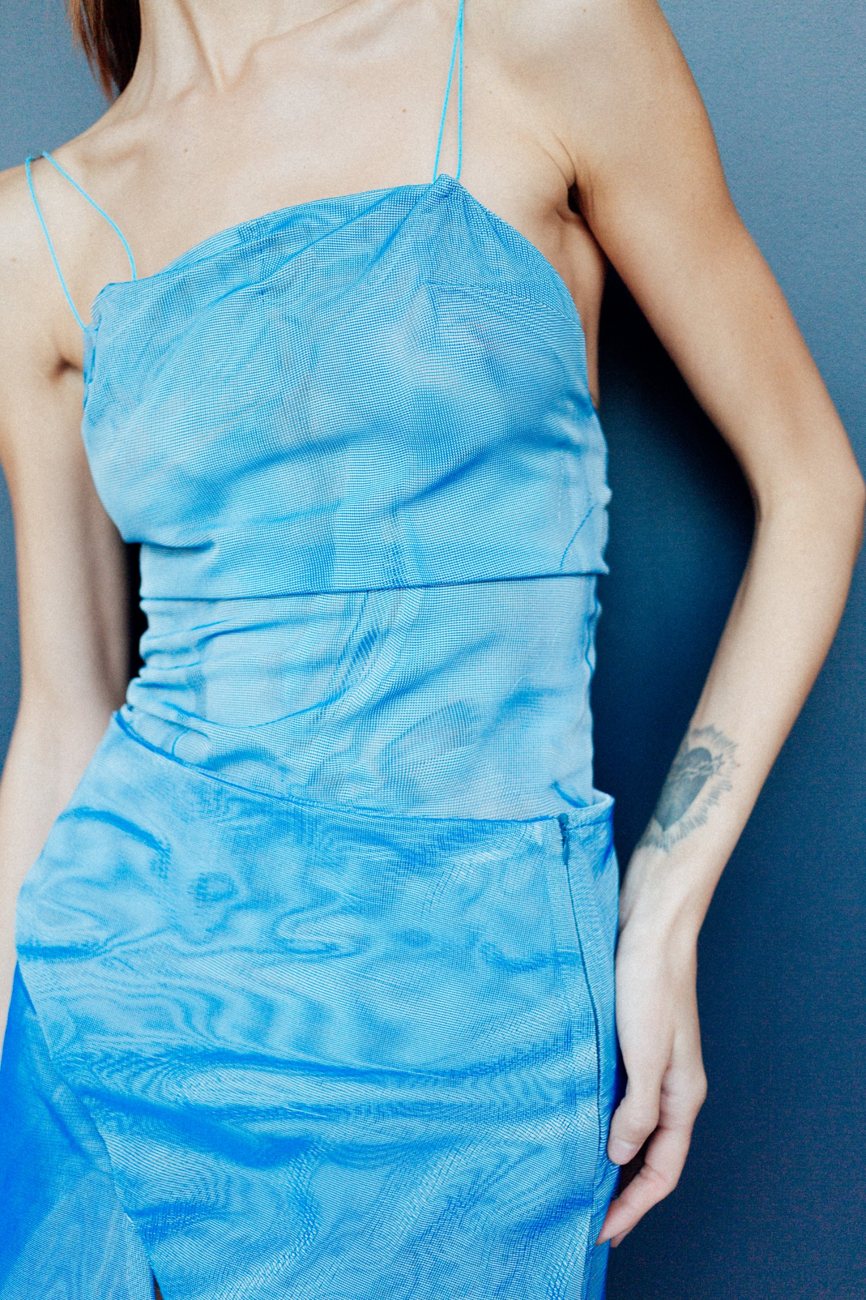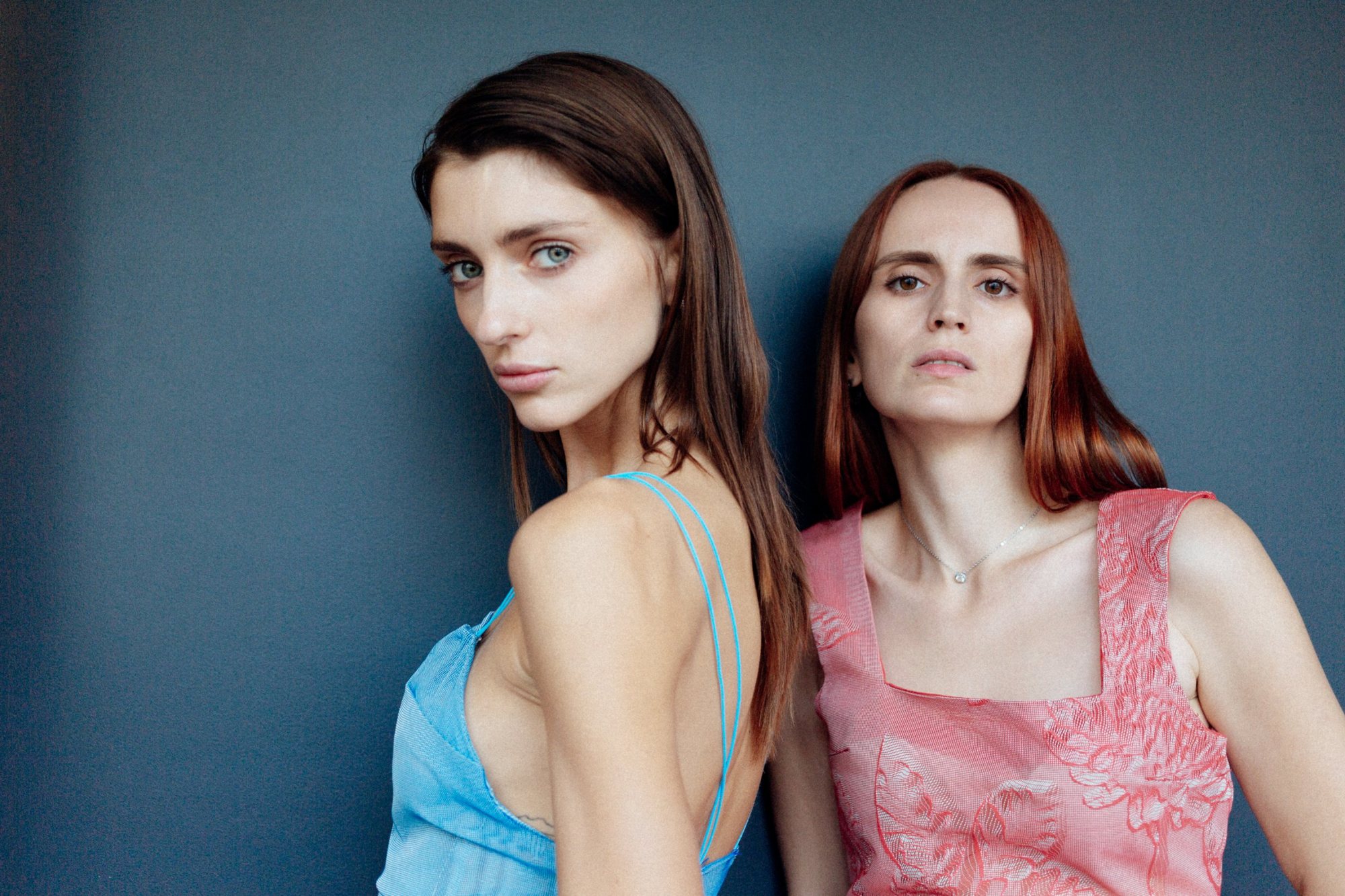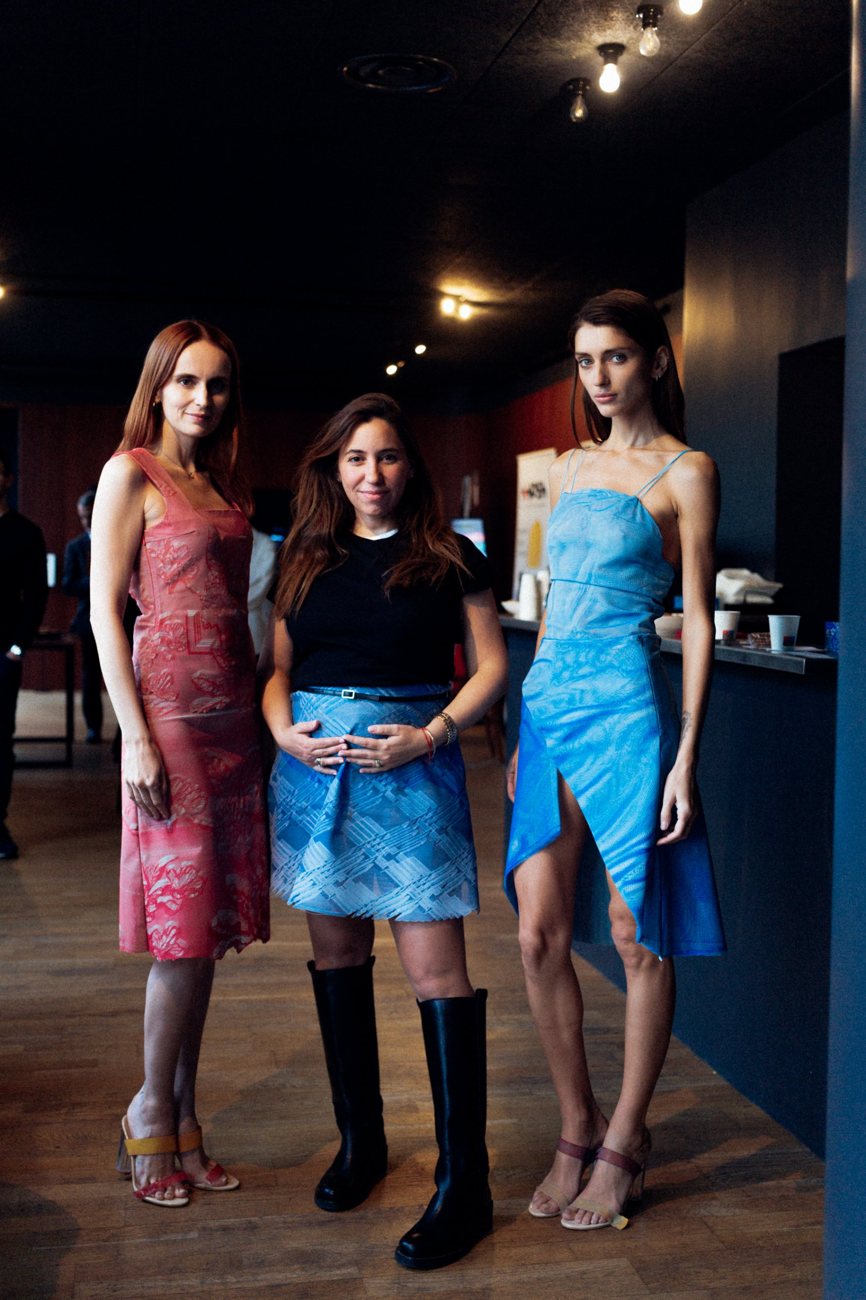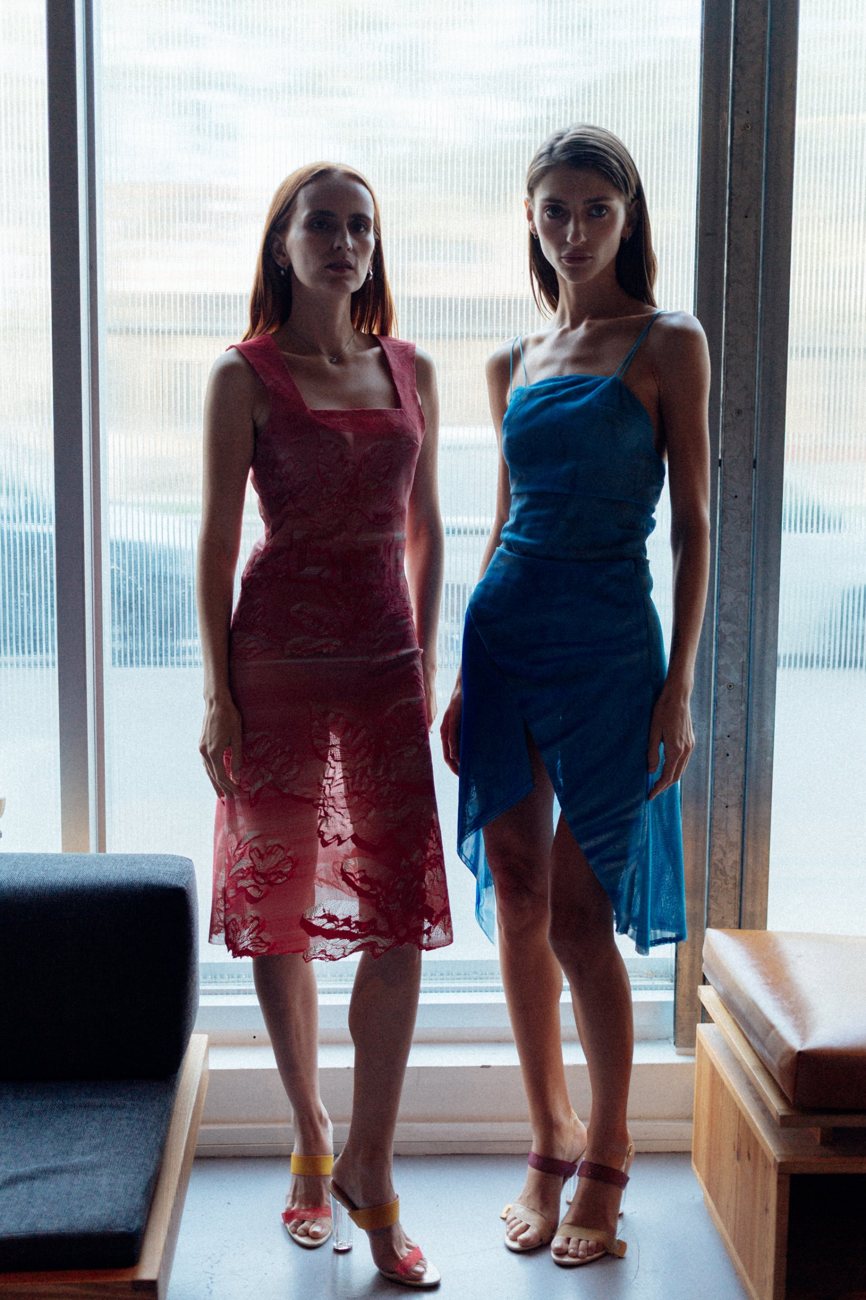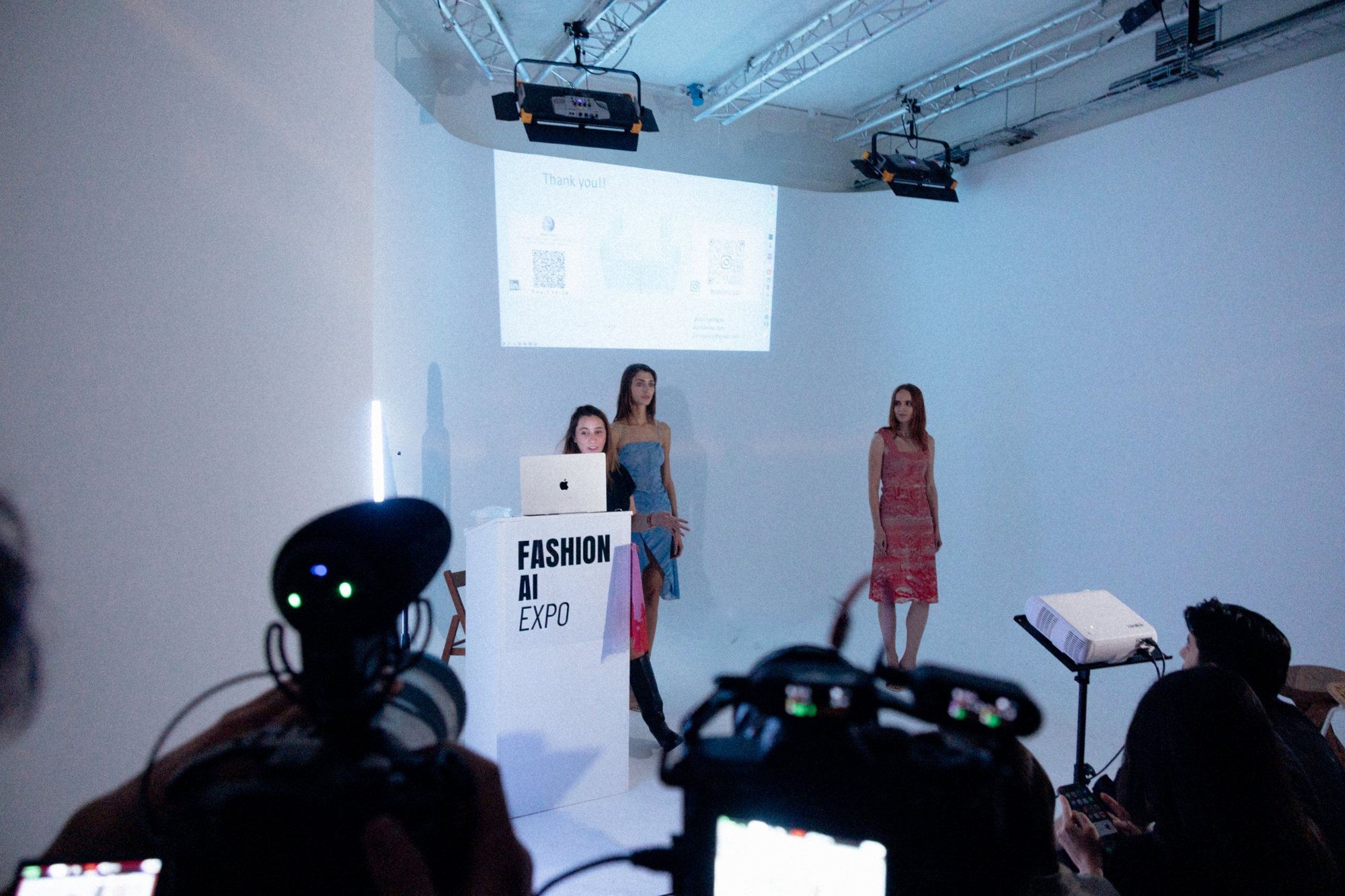
At Fashion AI Expo Paris, Danit Peleg, founder of 3D Printed Fashion Lab, showed how a garment can travel as a digital file and be printed to measure, on demand, with AI running much of the process.
The skirt Danit Peleg wore on stage at Fashion AI Expo had been designed on her computer and printed in her lab the day before she flew to Paris. No fabric was cut, no stock was shipped, and no factory was involved.
For her, that is the point. "The garments are digital files," she said, "so I can literally text you a jacket made to your size."
The garments are digital files, so I can literally text you a jacket made to your size.
Danit Peleg, 3D Printed Fashion LabA Collection Printed at Home
It began at fashion school. Peleg loved making her own textiles, so for her graduation collection she decided to print the whole thing instead of sewing it. She knew almost nothing about 3D printing and had nine months.
She taught herself in a small makerspace, worked out her own process for printing textiles on desktop FDM machines, and then moved six printers into her home. They ran day and night, and she woke up to change filaments. The result was five looks, printed head to toe, shoes and accessories included.
The story went viral overnight. Her teacher gave the project a B, but The New York Times wrote about it, and three months later she gave a TED talk that was translated into more than 40 languages. Her lesson for designers: share your work. "Don't be scared. No one will copy you."
A Dress for Someone She Never Met
Within weeks, the organizers of the Rio 2016 Paralympics asked her for a dress for the opening ceremony. The dancer, a double leg amputee, would perform a samba with a robot partner. The two women never met before the show.
Instead, the dancer took two photos of herself in a simple app. Peleg took the measurements into her CAD software, and all sampling with the creative team happened virtually. The dress fit, and the next day Brazilian magazines thought it was a real fabric.
That pushed her towards everyday wear, like the printed bomber jacket she began selling online with Gerber Technology. Customers, from fashion schools to collectors, could choose the colour of the textile and the lining.
No Cutting, No Waste, No Stock
Fashion, Peleg reminded the audience, is one of the most polluting industries, and small changes such as a new thread will not be enough. Her process rethinks production from scratch.
- No cutting. Each piece is printed to its final shape, so no fabric is cut away.
- Made to measure. Every garment can be customized and personalized to fit anyone.
- No inventory. Nothing is printed until it is ordered, which avoids the overproduction that ends in landfill or is burned.
The process is digital from end to end, so production can happen locally. She has also pushed it towards automation. With four-extruder printers she can make large pieces of fabric, and in one experiment in Bulgaria a robotic arm handled the printing of lace for 200 skirts in 24 hours, with no person on the line.