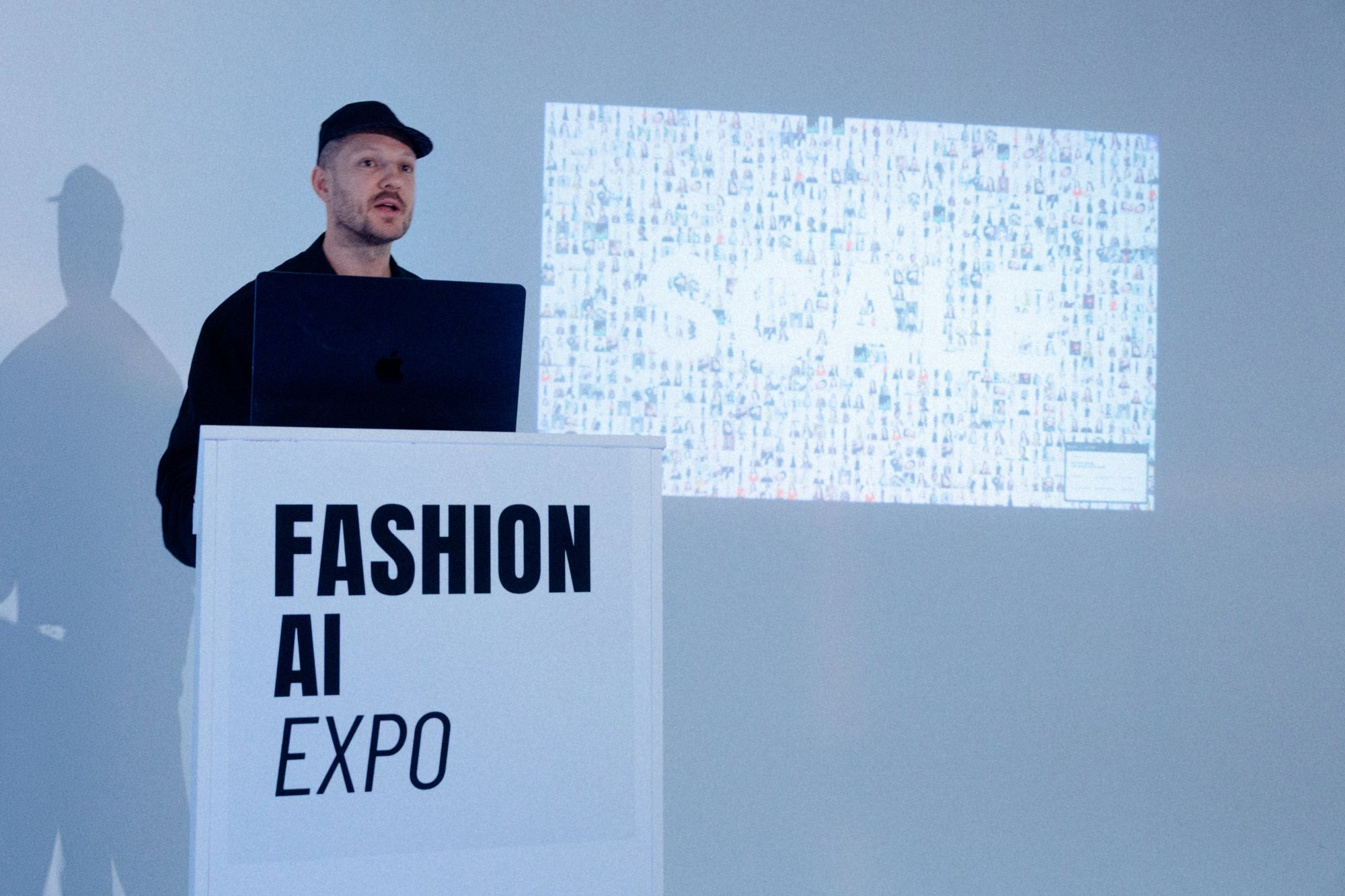
At Fashion AI Expo Paris, Artem Kupriianenko, CEO of Genera.Space, shared what two and a half years with nearly 200 fashion brands taught him: AI imagery only works for fashion when it follows seven rules, and skipping a single one is enough to fail.
Artem Kupriianenko does not come from fashion. He trained as an architect, then spent twenty years in computer graphics, building visualization companies that work with clients in 45 countries. That outsider's eye shaped the question he brought to Paris.
He opened by thanking the room for its intimacy. At most conferences, he said, the people who matter are out of reach. Here, the day was built for conversation.
The Paradox
Architecture, automotive and product design have long sold through images made before anything exists. A property developer markets a building from its renderings; a car is seen long before it is built. So why, Kupriianenko asked, was fashion left out?
The answer was economic. Photorealistic CGI of a human body in a garment could take one or two weeks for a single image. That makes sense for a building with one large budget. It does not for a collection of hundreds of products, each needing many images.
Generative AI changed the equation. Around three years ago, it became possible to imagine visualization at the speed and cost fashion needs. Kupriianenko showed the room his "museum": Genera's very first generations, impressive at the time, and far from the standard a professional brand would publish.
Thirty Months, Two Hundred Brands
With those first images in hand, the team went to fashion brands and asked how they could use the technology. They tested three directions. Two were consumer-facing, including style recommendations. Within three or four months, they set those aside and focused on the third: photorealistic content production for brands.
That meant a B2B platform built to sit inside a brand's real production pipeline, creating images for marketing, social media and internal communication. Getting there took two stages of roughly fifteen months each. The first was spent reaching the quality brands require. The second was spent discovering the rules a system must follow before it is ready for real production.
Those rules came from working with nearly 200 fashion brands. There are seven of them, and Kupriianenko was unequivocal:
If you skip just one, fashion brands will not be ready to go.
Artem Kupriianenko, CEO of Genera.SpaceThe Seven Rules
- Quality. People are quick to spot an AI image, so the first goal was images that read as entirely real. Then brands asked for more: files sharp enough for large-format print. Both had to be solved before anything else mattered.
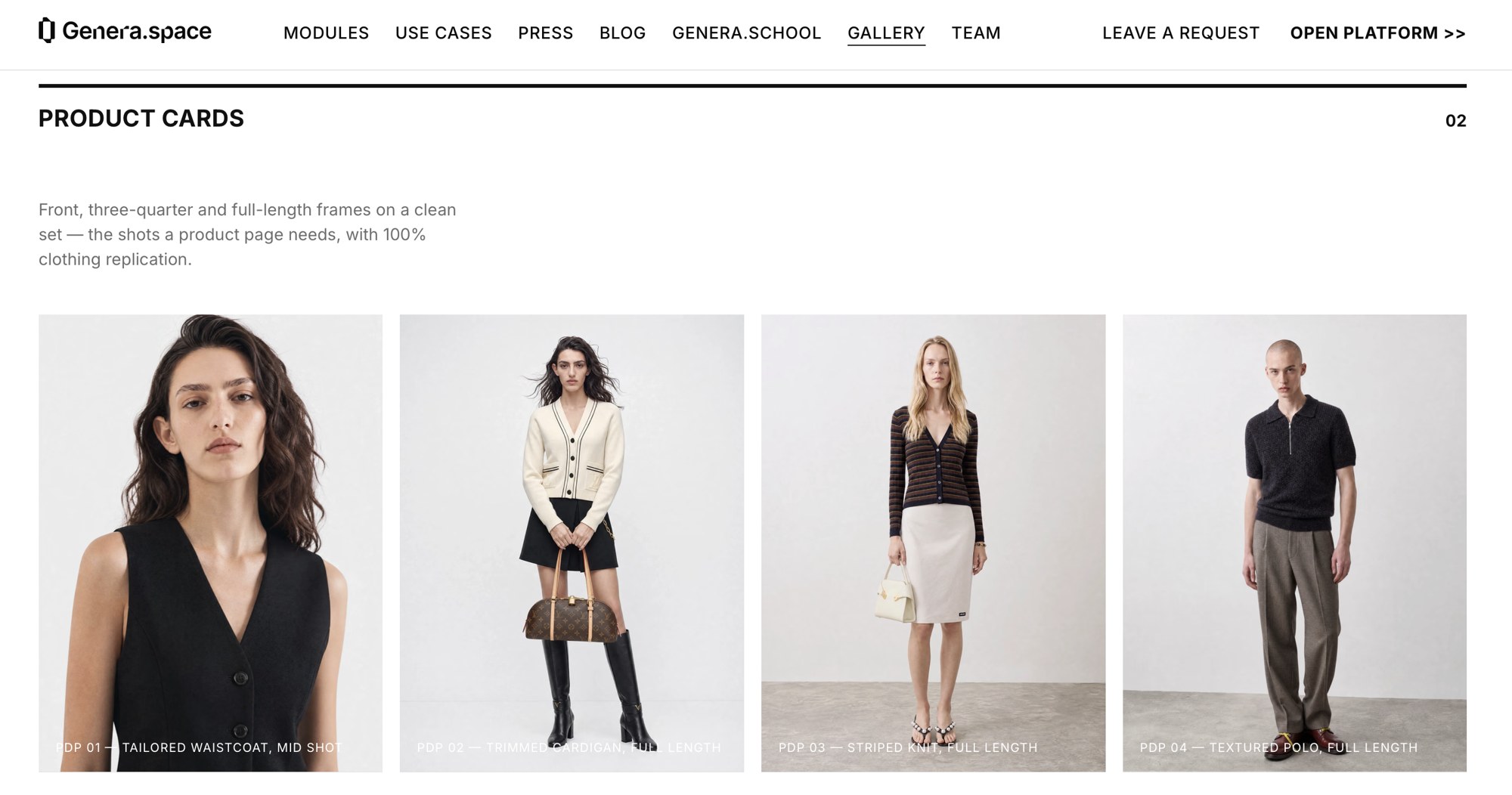
- Zero deviation. Fashion brands are precise about every detail, and AI systems tend to invent. The product must appear exactly as it is, down to its cut and the way it moves on a body, and stay consistent across every image.
- Scale. The largest marketplaces asked for 5,000 to 10,000 images a day, at the same quality, without operators. That required an automated infrastructure, with an AI agent and quality control working without a human in the loop. Brands can even connect assistants such as ChatGPT or Claude to the platform and brief them on styling and resolution.
- Visual DNA. Every brand has its own set design, poses, faces and mood. Genera's art directors train the system on a brand's own past imagery, so new content matches its identity.
- Automation. Kupriianenko describes Genera.Space not as a tool but as an operating system. A production studio can work by hand, down to a fold on a shoulder, or switch to fully automatic mode.
- Creativity. Beyond commercial images, brands produce creative content all year. The platform offers ready-made presets, and lets each brand build its own from a moodboard or past shoots.
- Onboarding. "Fashion is not about IT," he said, so Genera takes the technical side entirely on itself. A team signs in with Google or Apple ID and starts working.